Mathcamp has a new roadmap for the future! Read our 2025–2029 Strategic Plan.



Visiting Speakers
Mathcamp invites visitors to camp each year to broaden students' mathematical perspective. Visitors are selected for outstanding teaching skills and active engagement with students. Typically, visitors will give camp-wide colloquia to present a topic of interest and will also give continuing talks over one or two weeks at camp.
Here are some of our past guests:
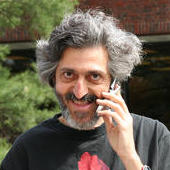
Avi Wigderson (Theoretical Computer Science, IAS)
Avi Wigderson studies Computational Complexity Theory, the mathematical foundations of computer science. This field tries to understand questions like "is multiplication harder than addition?" and "is discovery harder than verification?" (the latter is the famous "P vs. NP problem"). Favorite result: a "zero-knowledge" proof of every theorem. Visit Avi's website.
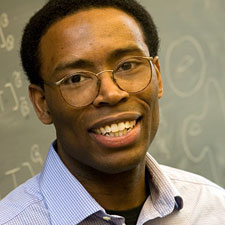
Craig Sutton (Pure Mathematics, Dartmouth)
Craig Sutton works on problems in inverse spectral geometry, where one explores the extent to which the geometry of a manifold is encoded in the spectrum of its associated Laplace operator. Metaphorically speaking, this means he considers the extent to which we can hear the shape of a drum. Of particular interest to him is understanding whether we can "hear" the geometry of spheres and other symmetric spaces. Visit Craig's website.
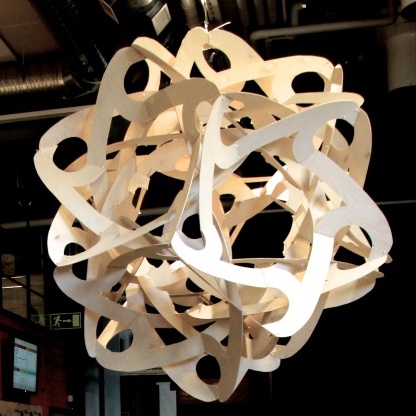
George Hart (Mathematical Artist, freelance)
George Hart loves to take cool geometric ideas and translate them into tangible physical form, for example by making geometric sculpture. He's a co-founder of the Museum of Mathematics in NY, where he was Chief of Content during its design phase, and a Professor Emeritus at SUNY Stony Brook, and now is a freelance mathematician. When he visits Mathcamp, he likes to try out new ideas for hands-on workshops. Visit George's website.
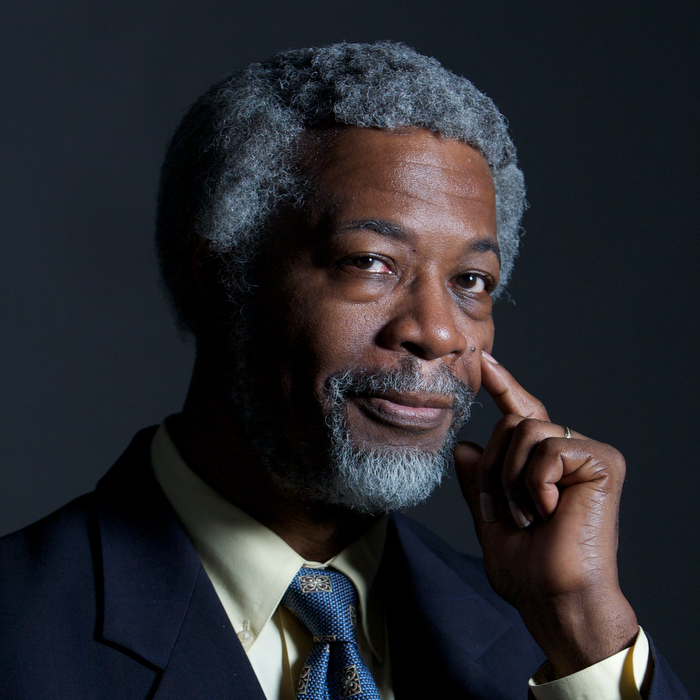
Jim Gates (Physics, UMD)
Jim Gates uses mathematical models involving supersymmetry, supergravity, and superstring theory to explore nature. One of his current focus areas includes Adinkras, a new mathematical concept, linking computer codes like those in browsers to the equations of fundamental physics as if our physical reality resides in the science fiction movie, "The Matrix." Read more about Dr. Gates.
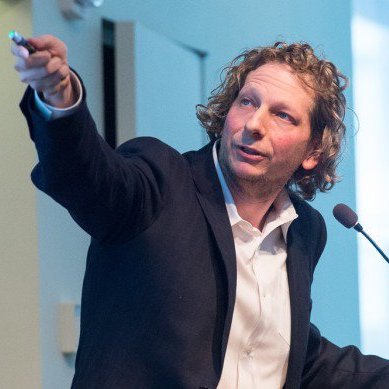
Josh Tenenbaum (Computational Cognitive Science, MIT)
Josh Tenenbaum is a professor of cognitive science and a member of the MIT Computer Science and Artificial Intelligence Lab (CSAIL). In his research, he builds mathematical models of human and machine learning, reasoning, and perception. His interests also include neural networks, information theory, and statistical inference. Visit Josh's website.
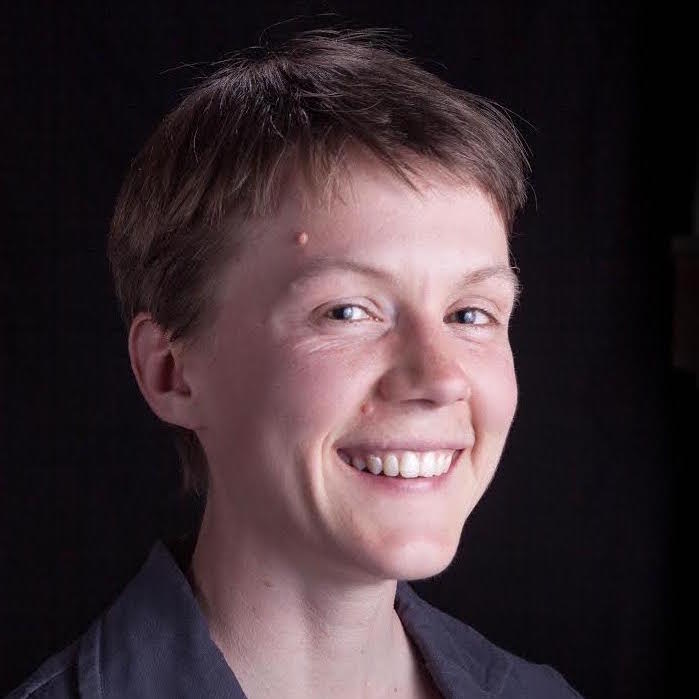
Katie Mann (Pure Mathematics, Brown)
Katie Mann combines techniques from geometry, topology and dynamics in her research, studying groups of homeomorphisms of manifolds. She also has a fondness for hyperbolic geometry and explaining math with pictures and models and shapes, which you'll surely see some of at mathcamp. Katie also enjoys cycling -- she's been known to bike 70 miles to a get to a math conference.
Visit Katie's website.
Megumi Harada (Pure Mathematics, McMaster University)
Megumi Harada works on symplectic geometry, which provides a mathematical framework for classical physics and also ties in to quantum physics, combinatorics, and graph theory. Megumi loves to draw pictures and to get people excited about math. In 2005, she was the only mathematician among the 10 finalists in a televised competition for "Ontario's Best Lecturer" (billed as "reality TV with a high IQ"). She has also appeared regularly on TV Ontario's More 2 Life program to discuss mathematics in everyday life.
Visit Megumi's website.

Olivia Walch (Applied Mathematics, University of Michigan)
Olivia Walch studies the mathematics of sleep and circadian rhythms— how light affects your body, how we can track and predict sleep in the wild, and what sleep health means for overall health. She is also a cartoonist, and makes math-themed apps, including one called Squigglish that makes lines wiggle with Fourier series. Visit Olivia's website.
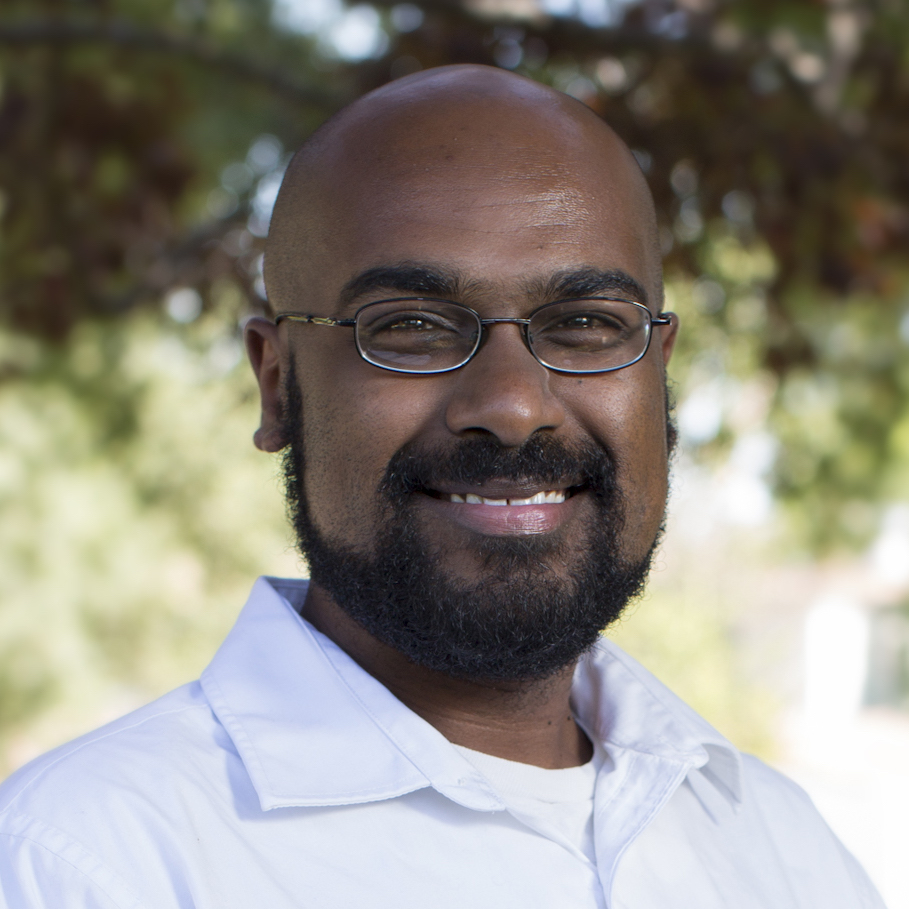
Mohamed Omar (Pure Mathematics, Harvey Mudd College)
Mo's research interests lie in the interplay between algebra, combinatorics, and optimization. Canada/USA Mathcamp is near and dear to his heart; he was an academic coordinator and a mentor in past years and earned fame by trolling anagram games with 4-letter crustacean larvae. For fun he plays in a competitive LGBT basketball league, creates math contest problems, frequently visits a cafe in Los Angeles housing over 700 board games, promotes all things Canadian (minus Rob Ford) with emphatic pride, and screams impatiently while watching Wheel of Fortune. Visit Mo's website.
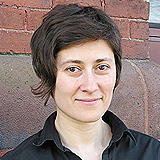
Moon Duchin (Mathematics and Democracy, Tufts)
Moon Duchin works in group theory, low-dimensional topology, dynamics, and applications to democracy.
She particularly looks at the large-scale geometric structure of groups and unusual metric spaces. One recurring theme is taming the geometric infinite by either attaching a "boundary at infinity" to a space you want to study, or else approaching it dynamically by understanding what happens after you flow or jump around in your space for a really long time. She's also actively interested in history, philosophy, and cultural studies of science. Visit Moon's website.
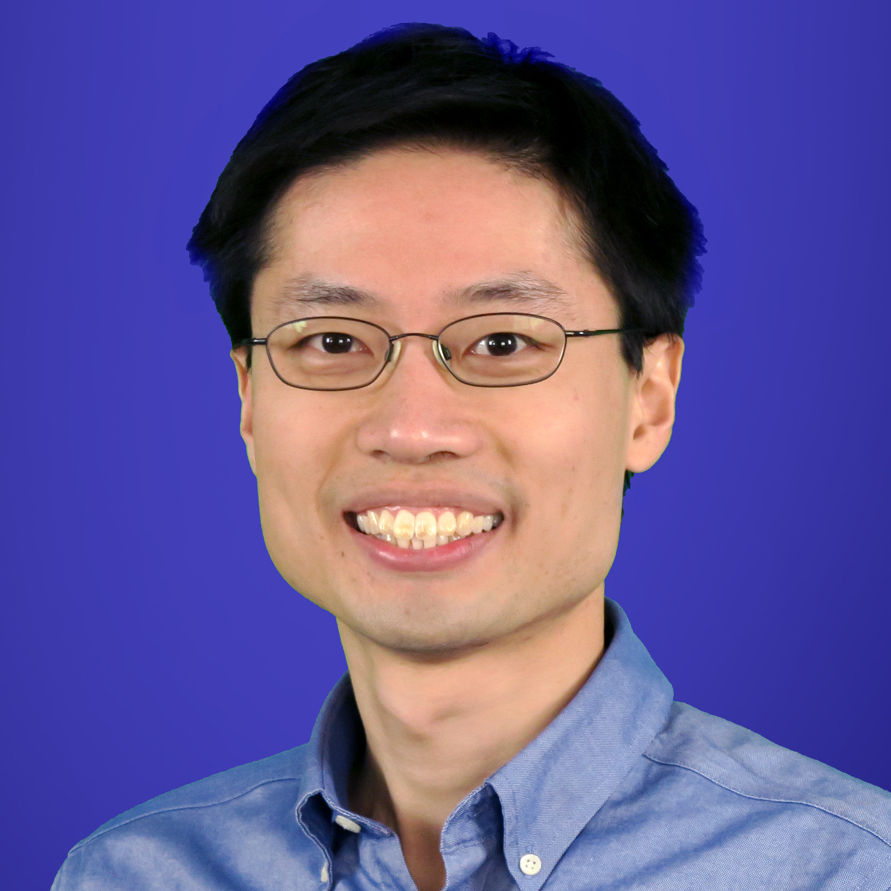
Po-Shen Loh (Mathematics and Math Education, Carnegie Mellon)
Po-Shen Loh is a math enthusiast and evangelist. He is the national coach of the USA International Mathematical Olympiad team, a math professor at Carnegie Mellon University, and the founder of expii.com. His math research considers a variety of questions that lie at the intersection of combinatorics (the study of discrete systems), probability theory, and computer science. Visit Po-Shen's website.
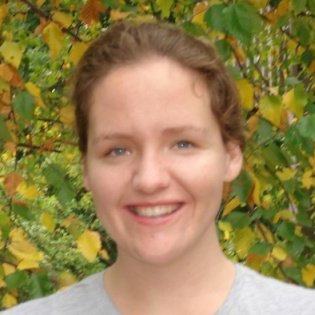
Sarah Koch (Pure Mathematics, University of Michigan)
Sarah Koch has two PhDs in Mathematics: one from Cornell, and one from the Université de Provence in France. She loves to look at pictures of the beautiful fractals that emerge from her study of complex dynamical systems. She also studies connections of group theory to Teichmüller theory and topology; in particular, she is quite fond of classifying twisted rabbits. Visit Sarah's website.
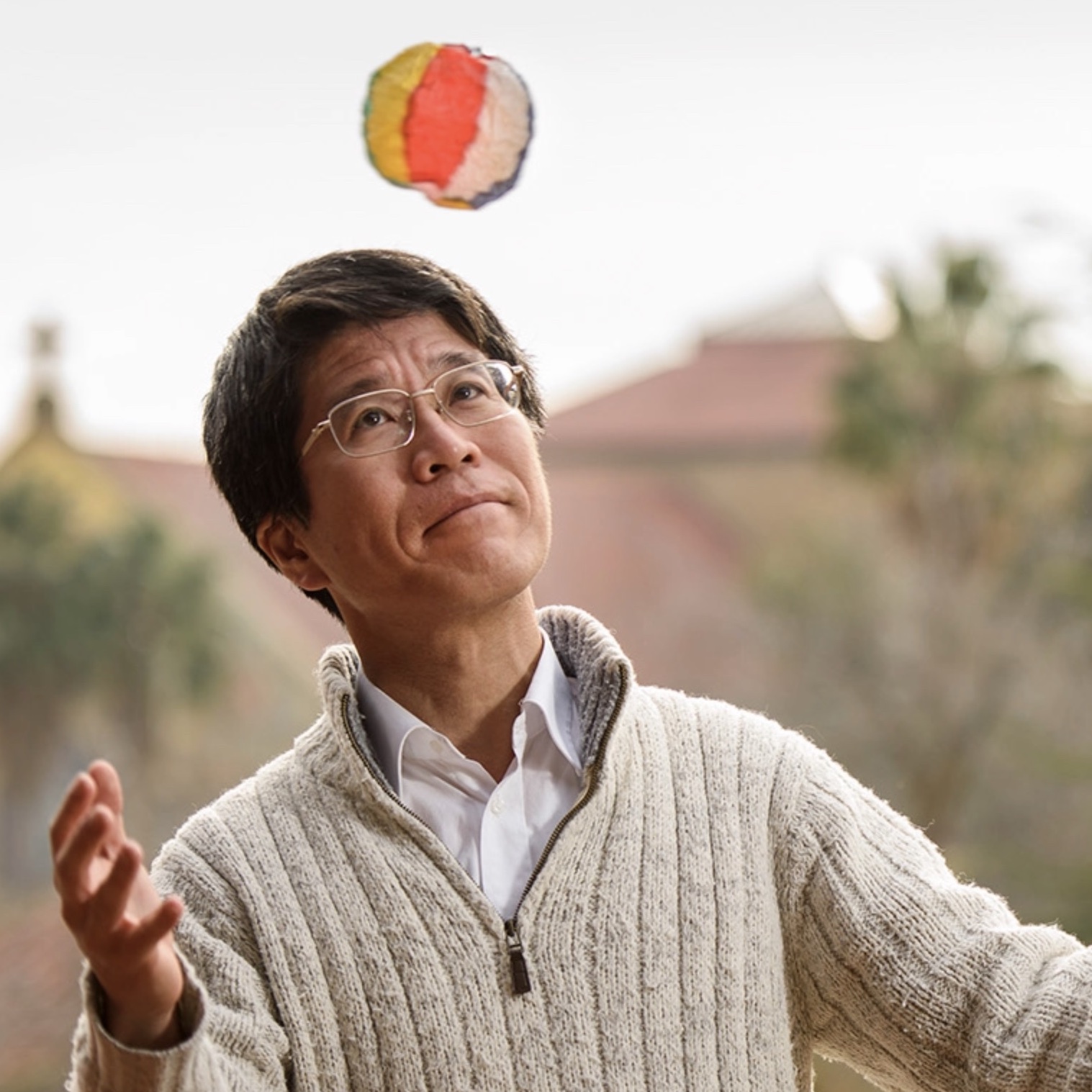
Tadashi Tokieda (Mathematical Physics and Toys, Stanford)
Tadashi Tokieda studies mathematical physics and collects toys which illustrate principles of mathematics. In his most recent lecture at Mathcamp, he discussed examples of the following fundamental observation: humans tend to be better at physics than at mathematics. When an apple falls from a tree, there are more people who can catch it---we know physically how the apple moves---than people who can compute its trajectory from a differential equation. Applying physical ideas to discover and establish mathematical results is therefore natural, even if it has seldom been tried in the history of science. (The exceptions include Archimedes, some old Russian sources, a recent book by Mark Levi, as well as his own articles.) Read more about Dr. Tokieda's work.
And we remember fondly the decades of visits from a long-time friend of the program:
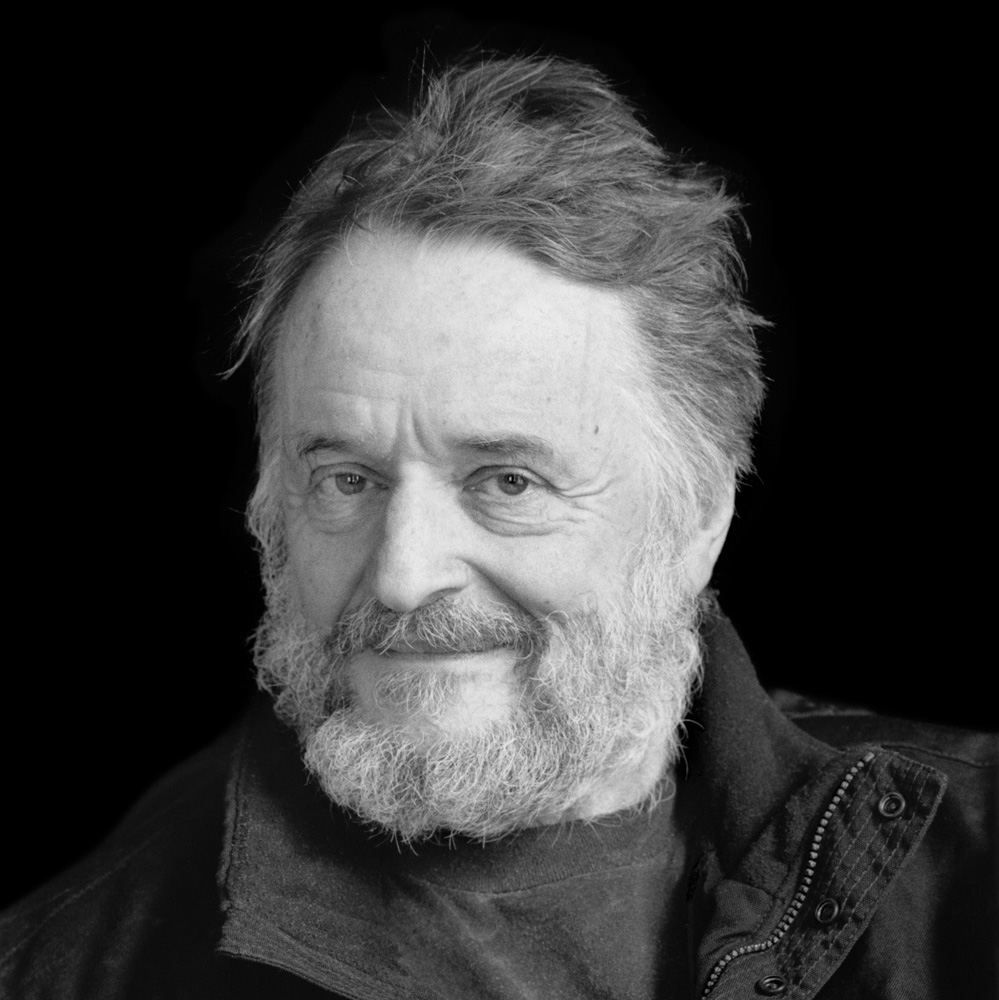
John Conway (Mathematics and Games, Princeton University)
One of the most creative thinkers of our time, John Conway is known for his ground-breaking contributions to such diverse fields as knot theory, geometry of high dimensions, group theory, transfinite arithmetic, and the theory of mathematical games. Outside the mathematical community, he is perhaps best known as the inventor of the "Game of Life."
You can browse the whole archive of past speakers in our archives.


